

Kazakhstan is a smart and friendly option for MBBS in Kazakhstan for Pakistani students who want a respected medical degree at a fair price. Leading universities teach in English, and fees start from about USD 3,200 a year. This guide covers the universities, real costs, admission steps, the student visa, and a simple recognition check.
Quick Verdict
- Degree: A 6-year plan at most universities: 5 years of study plus a 1-year hospital internship, taught in English.
- Top universities: Kazakh National Medical University, Astana Medical University, Karaganda Medical University, and South Kazakhstan Medical Academy.
- Fees: About USD 3,200 to USD 6,500 per year, by university.
- Entry: FSc Pre-Medical with good marks. There is no entrance exam, and IELTS is not asked.
- Intake: The main intake starts each September, and some universities add a second intake early in the year.
- Recognition: Check your university on the current PMDC list before applying, then plan for the NRE exam after graduation.
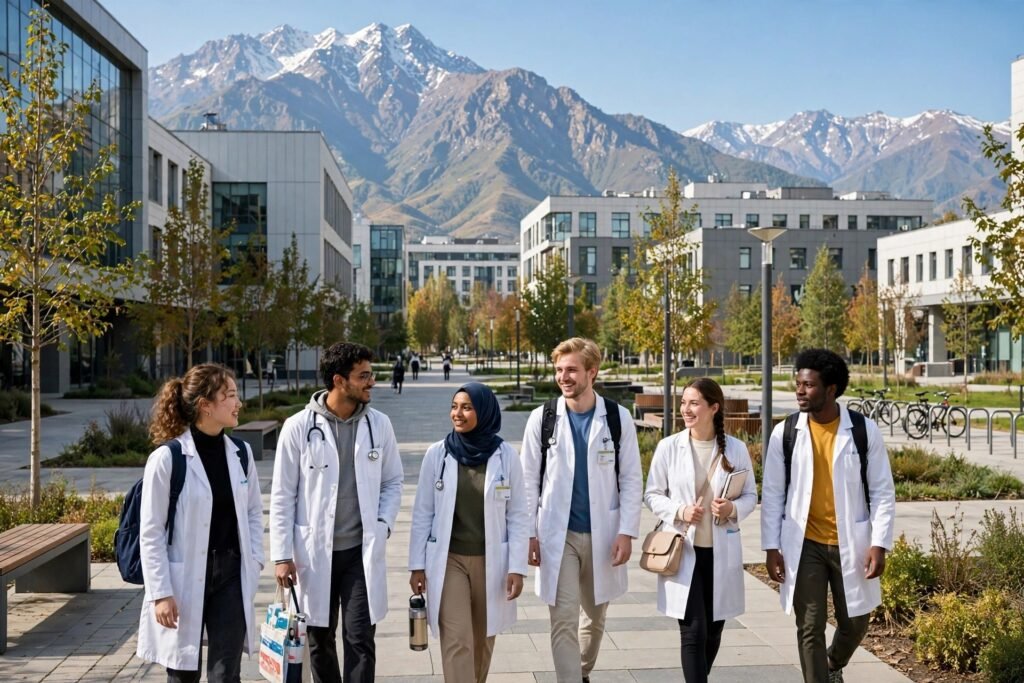
Why Do Pakistani Students Choose Kazakhstan for MBBS?
Kazakhstan gives you strong public universities at a price that feels fair for most families. Even the top national university here costs far less per year than a private medical college in Pakistan.
The country feels welcoming from day one. Kazakhstan is a Muslim-majority country, halal food is easy to find, and a large Pakistani student community is already studying here. Almaty is a short flight from Pakistan, so home never feels far away.
Teaching is practical and hospital based. Students train in busy city hospitals and meet real patients during the clinical years. Winters are cold, and the hostels answer that well with central heating and warm common rooms. For the bigger picture first, see our complete guide to MBBS abroad for Pakistani students.
Which Medical Universities in Kazakhstan Teach in English?
Several public universities run the full medical degree in English for international students. These four are the names Pakistani families ask about most.
Kazakh National Medical University, Almaty
This is the oldest and most famous medical university in the country, founded in 1930. It sits in Almaty, the largest and most lively city, close to major teaching hospitals. It is the premium pick in Kazakhstan.
Astana Medical University
Astana is the capital city, and this university runs a modern campus with active student life. Winters here are the coldest in the country, and the university keeps campus life warm, social, and full indoors.
Karaganda Medical University
Karaganda has a long teaching history and a strong name for clinical training. Fees stay friendly, and the city keeps living costs gentle for students.
South Kazakhstan Medical Academy, Shymkent
Shymkent is in the warmer south of the country. This academy is the budget friendly pick, and its Pakistani community grows every year.
MBBS in Kazakhstan for Pakistani Students: Fees by University
Tuition is the biggest cost. The table below shows typical annual fees from recent published sources. Always confirm the current fee with your university before you pay.
| University | City | Typical fee per year (USD) |
|---|---|---|
| Kazakh National Medical University | Almaty | 4,500 to 6,500 |
| Astana Medical University | Astana | 3,200 to 4,000 |
| Karaganda Medical University | Karaganda | 3,800 to 5,000 |
| South Kazakhstan Medical Academy | Shymkent | 3,500 to 4,500 |
Over the full course, tuition comes to roughly USD 19,000 to USD 39,000. The yearly fee is about PKR 9 to 18 lakh at recent exchange rates. That is still far below the cost of a private medical seat in Pakistan.
Living costs stay gentle too. A university hostel costs about USD 600 to USD 1,000 per year. Food and daily costs run about USD 150 to USD 300 per month, with Almaty at the higher end and Shymkent lower. Many hostels offer Pakistani and Indian food options, which makes settling in easy.
What Are the Admission Requirements for Pakistani Students?
The entry rules are clear, and a well prepared file moves fast. Here is what you need:
- FSc Pre-Medical with Physics, Chemistry, and Biology, with good marks. A score of 60 percent or above is a strong target.
- Matric and FSc certificates and transcripts, attested by IBCC.
- A valid passport and passport size photos.
- A birth certificate.
- A basic medical fitness certificate. The university guides you on how to complete this step.
- Age 17 or above at the time of admission.
Kazakhstan keeps admission simple and student friendly. There is no entrance exam. Universities review your FSc marks and documents, and some hold a short online interview. This is one reason the route suits students so well after the MDCAT season, and our guide to MBBS abroad without MDCAT explains how such routes work. The team at Oscar Overseas Education checks every document with you in advance, so this step stays smooth and simple.
How Do You Apply? A Simple Step by Step Plan
- Choose your university. Match fees, city, and climate to your marks and budget.
- Prepare your documents. Attested Matric and FSc papers, passport, and photos.
- Apply and receive your admission letter. This letter confirms your seat.
- Receive the university invitation letter. This is the key paper for your student visa.
- Apply for the student visa. Submit your complete file at the Kazakhstan embassy in Islamabad.
- Confirm your seat. Follow the university fee steps for your first payment.
- Travel, register, and enrol. Start classes with the September intake.
How Does the Student Visa Process Work?
Pakistani students travel on a student visa. Your university arranges an official invitation letter, and you apply at the Embassy of Kazakhstan in Islamabad with that letter, your passport, photos, admission papers, and proof of funds. A complete file makes this step smooth.
After you arrive in Kazakhstan, you register with the local migration office in the first days. Your university team helps you with this step, so it feels easy. Your registration renews each year of your studies, and your enrolment letter supports every renewal.
Is an MBBS from Kazakhstan Recognised in Pakistan?
The universities in this guide appear in the World Directory of Medical Schools. That listing is a strong and positive sign for your future licensing plans.
Pakistan keeps its own list of recognised foreign medical institutions, managed by the PMDC. That list is the one that counts for practice in Pakistan. Some older pages online still quote fixed approval lists from past years, and lists change over time. So the smart move is easy: check your exact university on the current PMDC list before you apply. It takes a few minutes and gives you full peace of mind.
After graduation, you return home and pass the NRE, the National Registration Examination, which leads to your licence to practise in Pakistan. Many graduates also prepare for USMLE or PLAB later, since the degree follows international standards.
Frequently Asked Questions
Is MBBS in Kazakhstan fully taught in English?
Yes. International groups at these universities study the full degree in English. Kazakh and Russian language classes are part of the course, and they help you talk with patients during hospital training.
Do Pakistani students need IELTS or MDCAT for MBBS in Kazakhstan?
In most cases, no. Universities judge your FSc marks, and IELTS is not part of the file. An MDCAT score is not asked by most universities either, and a few hold a short online interview instead.
How much does MBBS in Kazakhstan cost in total?
Tuition is about USD 3,200 to USD 6,500 per year, so full course tuition is roughly USD 19,000 to USD 39,000. Add hostel costs of about USD 600 to USD 1,000 per year and living costs of about USD 150 to USD 300 per month. Your city and lifestyle decide the final figure.
When should I apply for MBBS in Kazakhstan?
The main intake begins each September, and universities open admissions in spring and summer. Start your documents in spring, and your file will be ready well on time. Some universities also open a second intake early in the year.
Your MBBS Journey to Kazakhstan Starts with One Simple Step
Kazakhstan offers Pakistani students a respected medical degree, honest fees, and a warm welcome. Book a free counselling session through our student services page, and let Oscar Overseas Education help you check your eligibility and choose the university that fits you best. Your white coat journey can begin this September.