

First Week Abroad for MBBS Students: Your first week abroad decides how smooth your whole MBBS journey feels. Students who finish seven jobs in their first seven days settle fast. Students who leave them for later spend their first month chasing papers instead of attending classes. The seven jobs, in order, are: university registration, hostel check-in, a local SIM, money, a medical check, local registration rules, and classes. Do them in that order, because each one unlocks the next.
First Week Abroad for MBBS Students
- Day one: University registration and hostel check-in. Nothing else matters until you have a student ID and a room.
- Day two: Local SIM and money. A working phone number and a bank account make every later step possible.
- Day three: Medical check and insurance activation. Do this while you are healthy, not when you need a doctor.
- By day seven: Local registration rules confirmed with the international office, timetable collected, and first classes attended.
- PMDC note: Your free PMDC Student Registration Certificate should already be done before departure. If you missed it, contact PMDC immediately; do not assume it can be fixed on arrival.
- Golden rule: Keep originals and copies of every document in two separate places, and share your hostel address and a local contact number with your family on day one.
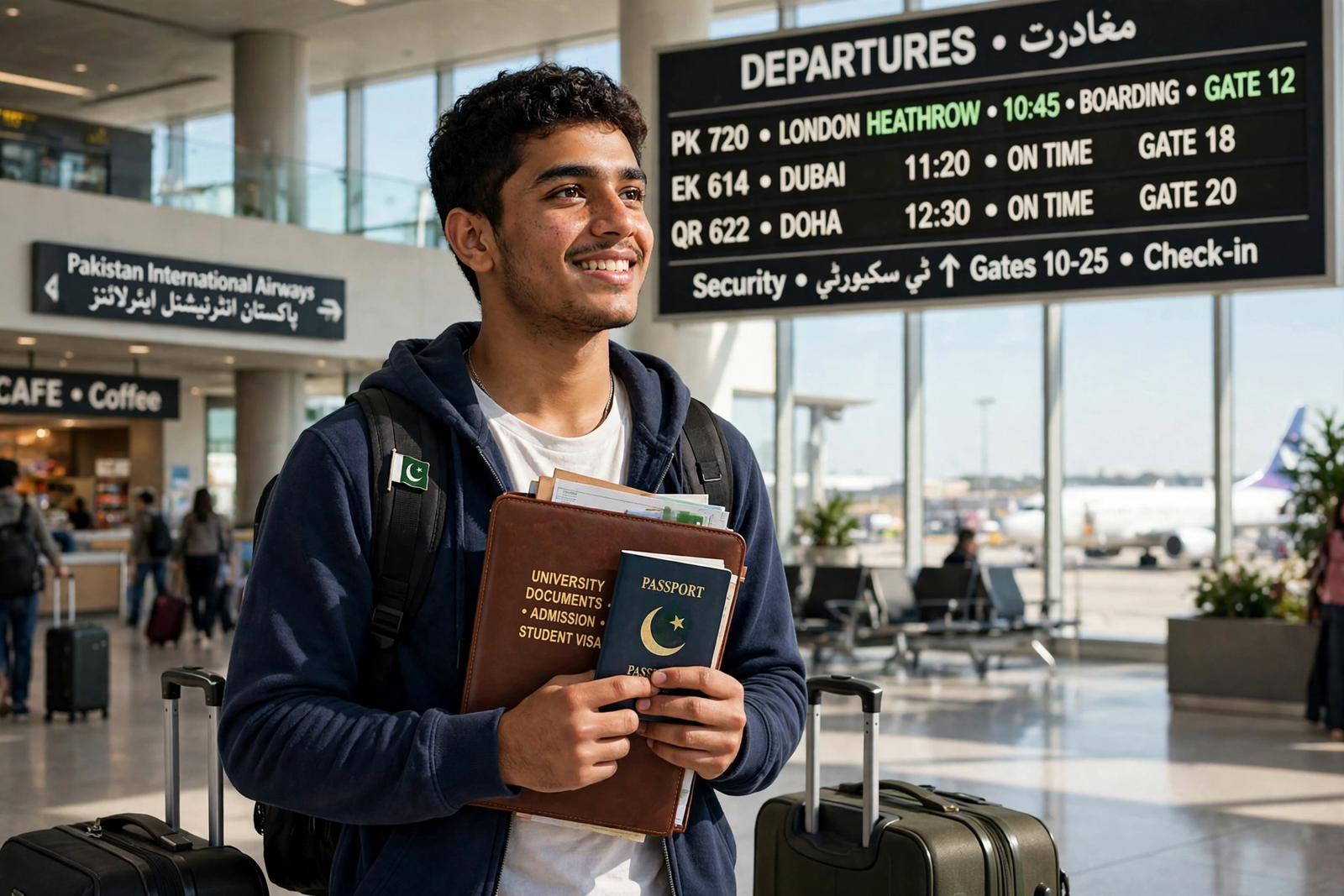
1. University Registration
Go to the international office or admissions office on your first working day. Carry your admission letter, passport, photographs, academic documents, and medical fitness certificate, plus copies of each. Registration usually gives you three things: a student ID card, an enrollment confirmation, and your class timetable. Ask for all three before you leave the office, and ask where the international office sits, because you will return there for every later paper. This is a key step in your First Week Abroad for MBBS Students.
Two questions to ask on day one: what is the last date for completing registration, and what happens if a document is missing? Missing papers are common and usually fixable, but only if you report them early. A student who waits two weeks to mention a missing document often finds the fix takes two more weeks. If you are comparing what comes before this step, the general MBBS abroad for Pakistani students guide explains the admission route that brought you here. If MDCAT was your worry, the MBBS Abroad Without MDCAT guide covers that route separately.
2. Hostel Check-In
Check into your hostel the same day you register, or the day you land if your room is ready. At check-in, do four things before you unpack: note the room inventory (furniture, keys, meter readings if any), test the locks and windows, save the warden’s number, and learn the hostel rules on visitors, cooking, and quiet hours. Photograph any existing damage in the room and report it in writing on day one, so it is not charged to you later. Settling in quickly helps your First Week Abroad for MBBS Students run smoothly.
Meet your roommates early and agree on basics: sleep hours, shared costs, and cleaning. Most hostel conflicts are not about big issues; they are about small habits nobody discussed in week one. If your room has a serious problem, such as no heating in winter or a broken lock, report it to the warden in writing and keep a copy.
3. Local SIM and Money
Buy a local SIM card as early as possible, ideally at the airport or on day one. Your phone number becomes your identity for the bank, the university portal, delivery apps, and your family. Without it, every other step slows down. Ask the shop for a package with enough mobile data for maps and calls, since you will use both constantly in week one. A working phone is essential during your First Week Abroad for MBBS Students.
For money, open a local bank account in your first week if your university or hostel requires one, and keep an emergency cash reserve separate from your daily spending. Set a first month budget before you arrive, and track the first week’s spending honestly; students who blow the first month’s budget in week one usually did it on eating out and taxis, not on necessities. Check the current cash-carry rules before you fly, since limits change, and never carry all your money in one place.
4. Medical Check and Insurance
Many universities require a medical check after arrival, and some require it before you can attend clinical classes. Ask the international office on day one whether a check is due, where it happens, and what it costs. Do it in week one even if no deadline is given, because a small issue found early is a formality, while the same issue found during exam season is a crisis. Do not delay this during your First Week Abroad for MBBS Students.
Activate your health insurance in week one too, and find out three things: which clinic or hospital your insurance covers near your hostel, what the emergency number is, and what to do if you need care at night. Carry any regular medicines with their prescriptions, and carry a short written note of any allergies or conditions in English and, if possible, in the local language.
5. Local Registration Rules
This is the step students miss most, because it varies by country. Some countries require foreign students to register their address with local authorities or the university within a short window after arrival. Others handle it through the university. The rule, the office, and the deadline are all different, so this guide deliberately gives no single deadline: ask your university’s international office on day one what registration applies to you, where it happens, and by when. Then do it immediately. A missed registration deadline can mean fines or problems with your visa record, and it is the most avoidable problem in this whole guide.
The same principle applies to your visa record generally. Keep your passport, visa, and registration slips safe, keep copies separately, and never hand your original passport to anyone except an official office that gives you a receipt.
6. Classes, Orientation, and Language
Attend orientation even if it feels optional. Orientation is where you learn the timetable system, the attendance rules, the exam pattern, and who to contact for each problem. Collect your timetable, buy or borrow the first week’s study material, and find your classrooms before your first lecture, not on the morning of it. Orientation matters in your First Week Abroad for MBBS Students.
Start the local language on day one, even if your degree is taught in English. You need it for daily life first: shops, transport, and hostel staff. Later, during clinical training, you will need it for talking to patients. Ten useful phrases learned in week one will do more for your confidence than a month of worrying about fluency. If your university offers a language course for international students, join it in week one while seats are open.
7. Safety and Contacts
On day one, save these numbers in your phone: your university’s international office and helpline, your warden, your country’s embassy or consulate, and the local emergency number. Share your hostel address and one local contact number with your family the same day. Agree with your family how often you will check in during the first month, so a missed call does not become a panic. Save these contacts during your First Week Abroad for MBBS Students.
Learn the safe routes: the way to campus, the way to the nearest shop and clinic, and which areas to avoid at night. Ask seniors, not strangers, for this advice, and trust it over any map. If anything feels unsafe, tell the warden and the international office the same day; universities take these reports seriously, but only if they hear about them.
Mistakes to Avoid in Week One
- Leaving the PMDC Student Registration Certificate undone. It is free and it must be done before departure, so if you missed it, contact PMDC immediately instead of hoping it resolves itself.
- Keeping all documents in one bag. One lost bag then means every paper is gone. Originals and copies live in two separate places.
- Spending days without a local SIM. Every later step, from banking to maps, waits on a working number.
- Ignoring the local registration deadline because nobody reminded you. Ask on day one, then do it.
- Skipping orientation and the medical check because you feel fine. Both are cheapest and easiest in week one.
- Spending the first month’s budget in the first week on eating out and taxis.
FAQs
What if a document is missing when I register?
Report it to the international office on day one and ask for the fix in writing: what is needed, from where, and by when. Most missing papers are fixable, but only if you report them early. Do not wait for the office to discover the gap. Ask early in your First Week Abroad for MBBS Students.
Can I change my hostel room?
Usually yes, but the process and the timing depend on your university and on availability. Ask the warden in week one what the process is, even if you are happy with your room, so you know the route if a problem appears later.
Do I need local registration even if my university registered me?
Ask the international office directly, because the answer varies by country and sometimes by city. If any separate registration applies to you, do it within the deadline they give you, and keep the slip safe.
What if I feel lost or homesick in the first week?
That feeling is normal, and it passes faster if you build a routine: classes, one shared meal with roommates, one call home, and one small daily task such as learning five local phrases. If it does not lift after a few weeks, talk to your university’s student support office; that is what it exists for. Students who ask for help early settle faster than students who wait.
The Bottom Line: First Week Abroad for MBBS Students
Your first week has seven jobs: register, settle into your hostel, get a SIM, sort your money, do the medical check, confirm the local registration rules, and start classes. Do them in that order, keep your documents in two places, and ask the international office about anything you are unsure of on day one. The students who settle fastest are not the ones who knew everything before landing; they are the ones who asked early and finished the small jobs first. Oscar Overseas Education supports students through admission, visa, pre-departure preparation, and ongoing support after arrival, so if any step in this guide stalls, ask your counsellor before it becomes a problem.